From Doomscrolling to Dinner Parties: Finding Civic Life Offline
Like many other Gen-Zers raised on the internet, with a smartphone as an additional appendage, I’ve often found myself trapped in a rinse-and-repeat cycle of doom scrolling, searching for validation of my feelings. Under the false assumption that more information might better equip me to handle current events, I’ve perpetually flooded my nervous system, leaving me paralyzed and in chaos mode. My generation has come of age amidst increasingly urgent crises like climate change, reopened debates on civil and human rights, and even direct attacks on our democracy. It makes sense that we would turn to the tool that places the world at our fingertips. While maintaining an online presence fosters connectivity, I’ve noticed that being chronically online often leaves me feeling isolated and disengaged from my community, and I know I’m not alone in this.
This isn’t a novel idea – that our attachment to and dependence on our phones could be what is making us feel emptier. However, I’m not here to add to the shame of living in a digital era that demands our attention online. Instead, I want to share my reflections on how I’ve learned to balance being a digital citizen while also finding creative ways to plug in and cultivate a sense of belonging. Surprisingly, I’ve discovered that spending time with my friends has become an unexpected yet powerful avenue for civic engagement.
When I first began questioning the concept of community and what it meant to me, I realized how deeply ingrained the values of hyper-independence were in my life. This mindset prevented me from accepting the help required to truly be part of a community. Even as someone incredibly stubborn, I’ve learned that vulnerability with friends fosters connection. Accepting help, whether it’s an airport pickup, cat-sitting, or being cared for when I’m sick, has taught me that love often means a willingness to be inconvenienced. It’s about moving beyond convenience culture and transactional relationships, trusting that support will come full circle and everything will make its way back to me. As I softened my grip on self-sufficiency and began to experience the quiet power of mutual care, something else started to shift. I realized that the sense of connection I was cultivating in my friendships could also exist beyond my inner circle. That same spirit of care, I found, could be extended to the spaces I inhabit—the sidewalks, small businesses, and rhythms of my neighborhood. Community, it turned out, wasn’t just about who I let in—it was also about how I chose to show up where I am.
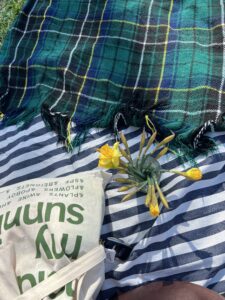
What has become somewhat of a self-help cliché has actually saved me. Finding joy in the small things. Something as mundane as taking a walk around my neighborhood and identifying local flora has deepened my connection to where I live. Supporting small businesses, like the local shop dedicated to finding the perfect lightbulb for my salt lamp, has reminded me of the value of human expertise and connection, which are things that can’t be replaced by an algorithm. These small interactions build a sense of responsibility for one another, reinforcing the importance of community. I’ve learned that being involved in my neighborhood doesn’t always have to be highly organized. It can be as simple as recognizing a need and acting on it, even if unceremoniously. Making dinner for my friends, attending a queer book club, and engaging with small, mission-driven community groups have all shaped my civic life in unexpected ways. These personal spaces are the backbone of neighborhoods, and through them, I’ve found meaningful ways to contribute. It’s through this consistent showing up that I’ve come to understand that civic engagement as more than just casting a ballot — it’s about being in relationship with the people and places around me. Voting matters deeply, but so does helping a neighbor, supporting local businesses, or building trust within your community.

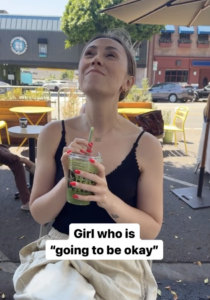
As I finish my reflection, I think it’s important to note that I don’t feel like I’ve “arrived” anywhere or found a magic cure for loneliness. There will still be days when I doom scroll and spend too much time online. But now, when I feel like the world is ending, I know I can take a walk around my neighborhood. And when the fragrant sweetness of Texas Mountain Laurel or Magnolia flowers fills the air, I will let it remind me that I am home, and I am connected to everything around me. I guess you could say I am a girl who is going to be okay.

About the Author
Kaylee Valencia is the Program Manager: Operations Strategist at The Andrew Goodman Foundation. Kaylee is a graduate of Louisiana State University with a bachelor’s degree in Political Science.