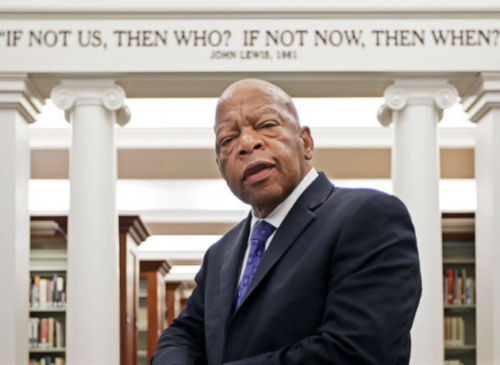
Reintroducing The John Lewis Voting Rights Advancement Act
Voting remains the cornerstone of civic engagement and public policy change. At the polls, people make their voices heard and hold elected officials accountable for their promises and actions. When we all have the freedom to vote, regardless of our race or background, we can build an economy that works for everyone, ensure our neighborhoods are safe, and guarantee our children have a better future. By defending our right to vote, we’re standing up for the freedom, fairness, and opportunity that every family deserves. That is why the reintroduction of the John Lewis Voting Rights Advancement Act is more critical than ever.
The plight of voting rights has a long history, beginning at the very outset of the United States. But with the passage of the Voting Rights Act of 1965 (VRA), the federal government not only outlawed race discrimination in voting, but also set a structure for monitoring it and a standard for equal voting rights and representation. However, this landmark piece of legislation was not the end of voter suppression that disproportionately targets people of color, the elderly, people with disabilities, and young folks. For decades, attempts at furthering the inequities in voter accessibility never disappeared, but only became more insidious. In 2013, a watershed moment occurred: The Supreme Court eliminated the VRA’s coverage formula in their Shelby County v. Holder decision. With the rise in voter suppression since Shelby County v. Holder gutted the VRA, the reintroduction of the John Lewis Voting Rights Advancement Act is a necessary step to restore these protections and ensure that our democracy remains fair and representative.
The ongoing struggle for voting rights in the U.S. has largely been carried forward by young people. Social justice activists from every generation have fought valiantly throughout our nation’s history to ensure that access to the ballot box, one of the most sacred places in America, is unfettered. Today, as youth and minority voters have continually shown up to the polls and engaged in the democratic process in unprecedented numbers, they are being met with severe backlash and retaliatory efforts to suppress their power and their movement. In fact, 2024 saw more restrictive voting laws enacted than in any year in the last decade with the exception of 2021.
Congress has the power to protect our democracy and expand access to the ballot box through legislation such as the John Lewis Voting Rights Advancement Act. By reinstating the VRA’s coverage formula and reactivating its preclearance provision, a process that ensures that any changes to voting rules that could discriminate against voters based on race or background are federally reviewed, we can all have an equal say in our future. The John Lewis Voting Rights Advancement Act was passed in the House on August 24, 2021, but has yet to have success in the Senate. As of March 5, 2025 the bill has been reintroduced. This reintroduction came just days before the 60th anniversary of Bloody Sunday, a pivotal moment in the civil rights movement when John Lewis and other activists risked their lives to secure the right to vote.If passed, this bill has the power to combat discriminatory practices in the electoral process.
The legacy of civil rights heroes like John Lewis and Andrew Goodman lives on not only through major legislative reforms such as the John Lewis Voting Rights Advancement Act, but also through the everyday, grassroots work of young folks across the country. The Andrew Goodman Foundation (AGF) works tirelessly to protect the youth vote by empowering and supporting students and young people alike. We understand that the capacity for young people to create broader social change is vast and that providing support to these movements has never been more important and influential. The impacts of the organizing that young people do are profound and can be seen in countless examples. The legacy of late Congressman John Lewis, a former AGF Advisory Board member, lives on in the students across the nation working to tackle strict voter ID laws that make it difficult or nearly impossible for young people to cast their ballot. It is demonstrated in the students working tirelessly to secure centralized polling locations to make voting more accessible on campus. And it shines in the monumental registration and get out the vote efforts that have come to define what it means to be a young activist in the voting rights space.
As we reflect on the sacrifices of those who marched in Selma, we urge members of Congress and elected officials to restore the Voting Rights Act protections and pass the John Lewis Voting Rights Advancement Act. The work on the ground by students is simply one way to honor Congressman John Lewis’ legacy. The fight is far from over and the potential for an equitable democracy free of racial discrimination is immense. Your capacity to create change is boundless, and we each have an important role to play in securing a future we can be proud of.

About the Author
Kaylee Valencia is the Program Manager: Operations Strategist at The Andrew Goodman Foundation. Kaylee is a graduate of Louisiana State University with a bachelor’s degree in Political Science.